
Final Reading + Reflection Guide of 2025!
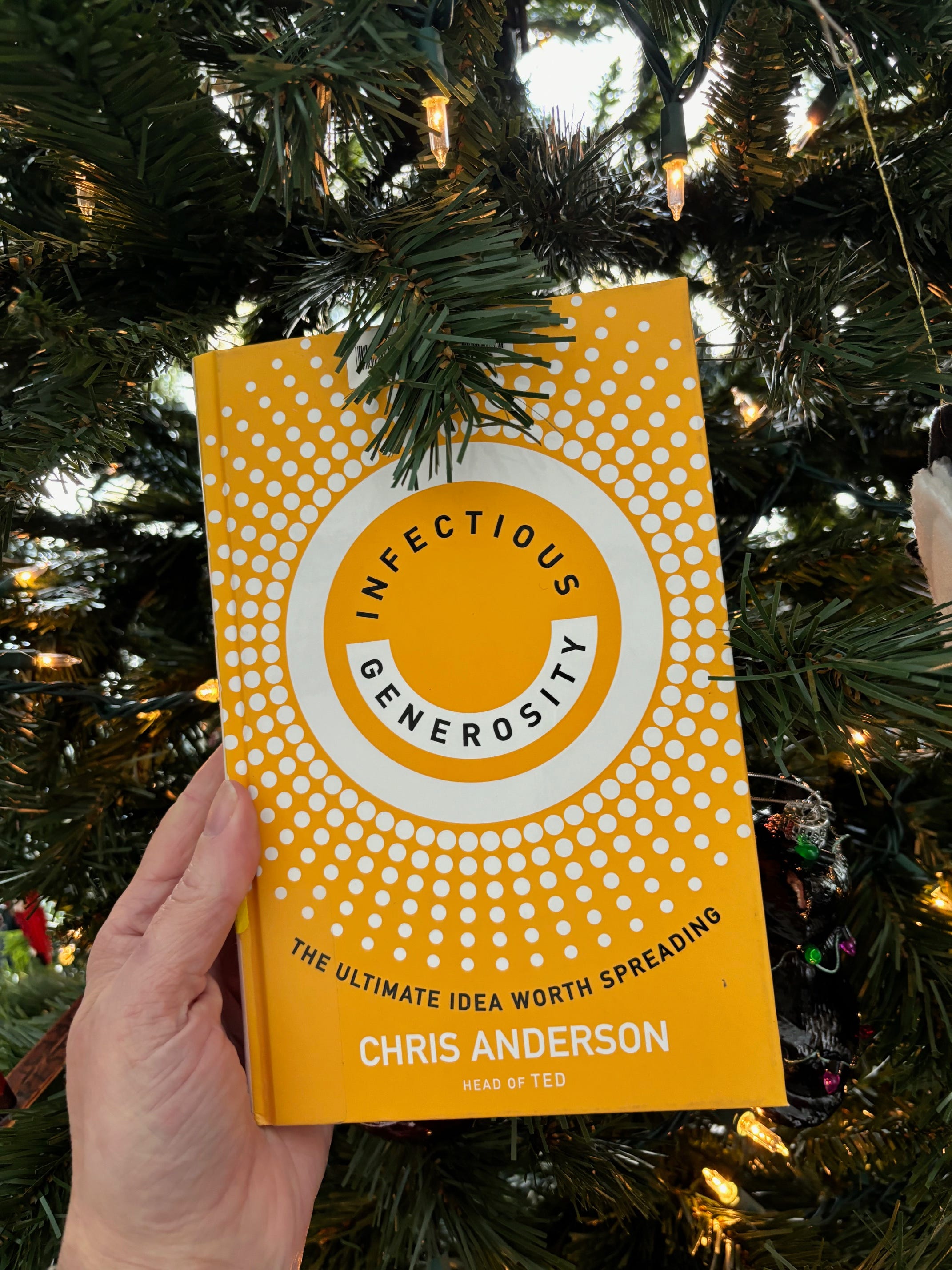
In our final book club meetings of 2025, we will discuss Infectious Generosity, as well as our favorite books of the year - both from book club and from our own individual reading.

It seems like just yesterday we were kicking off the 2025 Reading And Purpose Nonfiction Book Club with The Lazy Genius Way; now here we are wrapping up the year discussing Infectious Generosity and talking about our reading year overall! I am excited for our December meetings just around the corner.
Below you’ll find my reading + reflection guide for our December theme of ‘genuine hospitality’ and Chris Anderson’s book Infectious Generosity, plus some additional year-end questions we can chat about during our meetings as well. Anderson, the head of the organization that offers powerful and popular TED Talks, shares such a promising perspective of using the internet (among other strategies) to spread generosity - not only in financial ways but through knowledge and ideas, the ripple effects of kindness, connecting people with one another, and more. If you sometimes read online comments and feel like you’re losing faith in humanity as a result, consider reading Infectious Generosity and see what perspective it brings.
I have loved sharing these reading + reflection guides with you throughout the year! And just a preview that in 2026, these guides will share a bit more detail, additional online and print recommended resources, related titles, and more, and they will come out each month to all Reading And Purpose Nonfiction Book Club members. If you’d like to join us in the book club, feel free to do so - all paid subscribers are automatic members, and we’d love for you to be a part of this inspiring, growth-oriented group!
Remember, you can fully participate in our discussions even if you don’t get the book read. Chat with you soon at the Reading And Purpose Nonfiction Book Club or at Your Best Self book club at Dog-Eared Books!
Month: December (dates, reading assignments, alternative titles, and details here)
Theme: Genuine Hospitality
Book: Infectious Generosity by Chris Anderson
In general, what does ‘generosity’ mean/look like for you? What would prompt you to call an action or a person ‘generous’? Are there certain criteria that you feel need to be met in order for an act to be truly generous?
“It’s a clear-cut finding in social science: Generosity makes you happier,” Anderson writes on p.48. Why do you think this is the case? Have you found this to be your experience, too - that giving lifts your spirits or makes you feel happier?
Many things can prompt us to give of our time, talent, and/or treasure. What do you find tends to motivate your generosity? Do you have any type of ‘litmus test’ for your giving? (If this latter question doesn’t make sense, don’t worry - I’ll share an example of mine during our meeting that will help make it more clear!)
I found the chapter and commentary on ‘imperfect generosity’ really interesting; for example, how we might instinctively consider something an act of generosity, but then when we get more context around it, we change our mind. (You can refer to chapter 3 - and particularly the summary on p. 29 - if you have the book handy; I can summarize in our meetings, too.) What is your take on this? If a celebrity millionaire donates what we might consider a small amount of their money to a cause, is it better to thank them for giving at all or criticize them for not giving enough? Who gets to decide what is ‘enough’?
Similarly, when a business announces donating to a cause, it may be accused of doing it just as a marketing ploy - a sentiment of ‘if it were altruism, they would keep quiet.’ Yet others, and other businesses, may be inspired by that same donation and follow suit, also donating to that cause. What’s the right answer here? Are businesses (and individuals, for that matter) better off donating privately and not saying a word, or sharing their generosity in hopes of inspiring others to do the same?
Back in the spring, we read The Serviceberry by Robin Wall Kimmerer, all about reciprocity and the giving economy. While her book focused a great deal on our relationship with nature, I also found a lot of similarity between her points and those found in Infectious Generosity. Do you see a connection between generosity, humanity, and nature? What possible links might we find here?
In addition to monetary donations, Anderson addresses ‘Six ways to give that aren’t about money’ where he discusses things like attention, bridging, and more. (You can find all six ways listed on the chapter 6 title page, then further detailed in the subsequent pages, if you wish). Have you considered these as types of generosity before? Which ones stand out for you, or perhaps come more easily to you? In what other forms might we find generosity that we haven’t previously considered as such?
In general, it seems we often assume people to be rather selfish, primarily focused on ‘looking out for #1.’ Yet Infectious Generosity is filled with stories of random people receiving thousands of dollars with no strings attached and no instructions on how to use it, and the majority continually chose to share/give most of it away (to family, friends, external causes, and so on). What thoughts - about assumptions, society, media, and more - does this bring up for you? If you were suddenly gifted $10,000 with no strings attached, what do you think you would do with it?
What are some ways we can be generous even if we are experiencing financial difficulty or feeling low on time or energy? Can we do so without depleting our own reserves?
You might have noticed that while our book this month focuses on generosity, I chose our theme to be ‘genuine hospitality.’ What connections do you see between generosity and hospitality? How about differences? Especially as we approach the holiday season, what are some ways we can be generous with our hospitality?
What are your top takeaways from this book and/or our discussion? What will you do, or do differently, based on the reading/discussion?
And a few year-end questions to consider:
Some of you have been a part of the book club all year and some of you are brand-new. As you consider everything you’ve read for book club this year - or as you look through the list of books/topics we’ve addressed in 2025 - which one(s) stands out the most for you? What makes it rise to the top?
Likewise, as you look ahead to our 2026 lineup, which book(s) or topic(s) are you most excited for?
What other books have you read this year, outside of book club, that exceeded your expectations or made a powerful impact in some way? Feel free to share both nonfiction and fiction titles.
How has your reading life been overall in 2025? What plans, goals, or intentions are you setting for your reading in 2026, if any?
****************
Dr. Christi Hegstad is a Professional Certified Coach (PCC) and self-proclaimed book nerd, here to help you work with meaning, live with purpose, and reach bold + difference-making goals! Peruse coaching opportunities at ChristiHegstad.com, email questions to ReadingAndPurpose(at)gmail(dot)com, and check out book recommendations at the Reading And Purpose bookshop.org store (your book purchases through the links provided may earn me a small commission, at no extra cost to you).
Thank you for being here!